
Physiological Definition and Scope: Complete Nursing Notes in Hindi & English
नमस्ते साथियों! Bexyhub पर आप सभी का स्वागत है। मेरा नाम दीपक कुमार (Nursing Officer) है। आज के इस आर्टिकल में हम नर्सिंग के एक बहुत ही महत्वपूर्ण टॉपिक के बारे में विस्तार से चर्चा करेंगे। यह नोट्स विशेष रूप से नर्सिंग छात्रों और मेडिकल एग्जाम्स की तैयारी कर रहे साथियों के लिए सरल भाषा में तैयार किए गए हैं। चलिए शुरू करते हैं
Physiology is the branch of medical science that deals with the study of how the human body and its organs function. It explains the physical and chemical processes that take place inside a living organism to keep it alive and healthy. In simple words, while Anatomy tells us “what” the body parts are, Physiology tells us “how” they work together.
फिजियोलॉजी (Physiology)
चिकित्सा विज्ञान की वह शाखा है जिसके अंतर्गत हम यह अध्ययन करते हैं कि मानव शरीर और इसके अंग किस प्रकार कार्य करते हैं। यह हमें शरीर के भीतर होने वाली भौतिक और रासायनिक प्रक्रियाओं के बारे में बताता है जो एक जीवित जीव को स्वस्थ रखने के लिए ज़रूरी हैं। सरल शब्दों में कहें तो, एनाटॉमी हमें बताती है कि शरीर के अंग “क्या” हैं, जबकि फिजियोलॉजी हमें समझाती है कि वे अंग “कैसे” काम करते हैं।
Types of Physiology (फिजियोलॉजी के प्रकार)
शरीर की जटिलता को देखते हुए इसे मुख्य रूप से इन भागों में विभाजित किया गया है:
- Human Physiology (मानव फिजियोलॉजी)
This is the study of specific characteristics and functions of the human body as a living organism.
इसमें एक जीवित जीव के रूप में मानव शरीर की विशिष्ट विशेषताओं और कार्यों का अध्ययन किया जाता है। नर्सिंग में सबसे ज्यादा इसी का महत्व है। - Cell Physiology (कोशिका फिजियोलॉजी)
It focuses on the chemical and molecular processes that occur within individual cells.
यह उन रासायनिक और आणविक प्रक्रियाओं पर ध्यान केंद्रित करता है जो व्यक्तिगत कोशिकाओं (Cells) के भीतर होती हैं। - Systemic Physiology (सिस्टम फिजियोलॉजी)
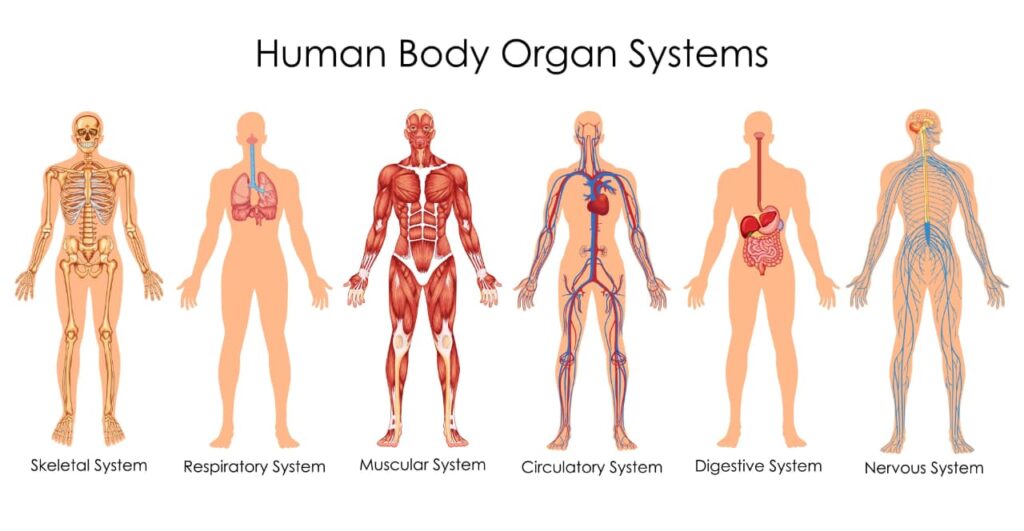
This includes the study of functions of specific organ systems, such as the Cardiovascular system or Respiratory system.
इसके अंतर्गत शरीर के विशिष्ट अंग प्रणालियों के कार्यों का अध्ययन किया जाता है, जैसे कि हृदय प्रणाली (Cardiovascular) या श्वसन प्रणाली (Respiratory)। - Pathophysiology (पैथोफिजियोलॉजी)
It is the study of how physiological processes are altered by disease or injury.
इसमें इस बात का अध्ययन किया जाता है कि बीमारी या चोट के कारण शरीर की सामान्य कार्यप्रणाली में क्या बदलाव आते हैं। (नर्सिंग छात्रों के लिए यह सबसे महत्वपूर्ण है)। - Exercise Physiology (एक्सरसाइज फिजियोलॉजी)
This branch studies how the body functions and adapts during physical activity or exercise.
इस शाखा में अध्ययन किया जाता है कि शारीरिक गतिविधि या व्यायाम के दौरान शरीर कैसे कार्य करता है और खुद को उसके अनुकूल कैसे ढालता है।
Types of Physiology
Cell Physiology
Study of the functions and interactions of cells.
कोशिकाओं के कार्यों और उनकी आपसी प्रक्रियाओं का अध्ययन।
Human Physiology
Study of the specific characteristics and functions of the human body.
मानव शरीर की विशिष्ट विशेषताओं और कार्यों का अध्ययन।
Systemic Physiology
Study of the functions of organ systems like Respiratory or Digestive systems.
शरीर के अंग प्रणालियों जैसे श्वसन या पाचन तंत्र के कार्यों का अध्ययन।
Pathophysiology
Study of functional changes associated with disease or injury.
रोगों या चोट के कारण शरीर के कार्यों में होने वाले परिवर्तनों का अध्ययन।
Neurophysiology
Study of the functions of the nervous system including brain and nerves.
तंत्रिका तंत्र जिसमें मस्तिष्क और नसें शामिल हैं, उनके कार्यों का अध्ययन।
Endocrinology
Study of hormones and how they control body functions.
हार्मोन और वे शरीर के कार्यों को कैसे नियंत्रित करते हैं, इसका अध्ययन।
Cardiovascular Physiology
Study of the functions of the heart and blood vessels.
हृदय और रक्त वाहिकाओं के कार्यों का अध्ययन।
Respiratory Physiology
Study of the functions of the air passageways and lungs.
वायुमार्ग और फेफड़ों के कार्यों का अध्ययन।
Renal Physiology
Study of kidney functions and urine production.
गुर्दे के कार्यों और मूत्र निर्माण की प्रक्रिया का अध्ययन।
Reproductive Physiology
Study of the functions of reproductive organs.
प्रजनन अंगों के कार्यों का अध्ययन।
Exercise Physiology
Study of how the body functions during physical activity.
शारीरिक गतिविधि के दौरान शरीर कैसे कार्य करता है, इसका अध्ययन।
Developmental Physiology
Study of how body functions change from birth to old age.
जन्म से लेकर बुढ़ापे तक शरीर के कार्यों में होने वाले बदलावों का अध्ययन।
Environmental Physiology
Study of how the body adapts to environmental conditions like heat or cold.
शरीर गर्मी या ठंड जैसी पर्यावरणीय स्थितियों के साथ कैसे तालमेल बिठाता है, इसका अध्ययन।
Scope of Physiology
Understanding Normal Body Functions
It explains how different organs like the heart, lungs, and kidneys work to keep us alive.
यह समझाता है कि हृदय, फेफड़े और गुर्दे जैसे विभिन्न अंग हमें जीवित रखने के लिए कैसे कार्य करते हैं।
Clinical Assessment and Diagnosis
Knowledge of normal physiology helps nurses identify when a patient’s body is not functioning correctly.
सामान्य फिजियोलॉजी का ज्ञान नर्सों को यह पहचानने में मदद करता है कि मरीज का शरीर कब सही ढंग से कार्य नहीं कर रहा है।
Maintenance of Homeostasis
It studies how the body maintains a stable internal environment despite changes in the outside world.
यह अध्ययन करता है कि बाहरी दुनिया में बदलाव के बावजूद शरीर कैसे एक स्थिर आंतरिक वातावरण बनाए रखता है।
Basis of Pathophysiology
Physiology provides the foundation to understand how diseases alter the normal working of body organs.
फिजियोलॉजी यह समझने के लिए आधार प्रदान करती है कि बीमारियाँ शरीर के अंगों के सामान्य कामकाज को कैसे बदल देती हैं।
Pharmacological Interventions
It helps in understanding how drugs and medications interact with different body systems to treat illnesses.
यह समझने में मदद करता है कि दवाएं बीमारियों के इलाज के लिए शरीर के विभिन्न प्रणालियों के साथ कैसे क्रिया करती हैं।
Medical Research and Technology
Physiology is the core of developing new medical treatments, artificial organs, and life-saving technologies.
फिजियोलॉजी नए चिकित्सा उपचारों, कृत्रिम अंगों और जीवन रक्षक तकनीकों को विकसित करने का मुख्य केंद्र है।
Nutritional Science
It explains how the body digests food, absorbs nutrients, and converts them into energy.
यह बताता है कि शरीर भोजन को कैसे पचाता है, पोषक तत्वों को कैसे अवशोषित करता है और उन्हें ऊर्जा में कैसे बदलता है।
Physical Rehabilitation and Therapy
It is essential for designing exercises and treatments to restore body functions after injury or surgery.
चोट या सर्जरी के बाद शरीर के कार्यों को बहाल करने के लिए व्यायाम और उपचार तैयार करने हेतु यह आवश्यक है।
Maternal and Neonatal Care
Physiology explains the changes during pregnancy and the functioning of a newborn’s body.
फिजियोलॉजी गर्भावस्था के दौरान होने वाले बदलावों और नवजात शिशु के शरीर की कार्यप्रणाली को समझाती है।
Geriatric Care
It helps in understanding how aging affects various organ systems in elderly patients.
यह समझने में मदद करता है कि उम्र बढ़ने का असर बुजुर्ग मरीजों के विभिन्न अंग प्रणालियों पर कैसे पड़ता है।
Importance of Physiology in Nursing
(नर्सिंग में फिजियोलॉजी का महत्व – क्योंकि आपकी साइट नर्सिंग स्टूडेंट्स के लिए है, तो उन्हें यह बताना ज़रूरी है कि वे यह क्यों पढ़ रहे हैं।)
Fundamental for Patient Care
It provides the necessary knowledge to monitor vital signs and understand patient reports.
यह महत्वपूर्ण संकेतों (Vital Signs) की निगरानी करने और मरीज की रिपोर्ट को समझने के लिए आवश्यक ज्ञान प्रदान करता है।
Identifying Abnormalities
A nurse can only recognize abnormal symptoms if they know the normal physiological functions.
एक नर्स असामान्य लक्षणों को तभी पहचान सकती है जब उसे सामान्य शारीरिक कार्यों का पता हो।
Difference Between Anatomy and Physiology
(एनाटॉमी और फिजियोलॉजी के बीच अंतर – अक्सर स्टूडेंट इन दोनों में कन्फ्यूज रहते हैं, इसलिए एक छोटा सा अंतर देना बहुत ज़रूरी है।)
Anatomy focuses on Structure
Anatomy is the study of the structure and shape of the body and its parts.
एनाटॉमी शरीर और उसके अंगों की संरचना और आकार का अध्ययन है।
Physiology focuses on Function
Physiology is the study of how the body and its parts work or function.
फिजियोलॉजी इस बात का अध्ययन है कि शरीर और उसके अंग कैसे काम करते हैं।
Question 1. Which branch of science specifically deals with the study of how body parts function?
A) Anatomy
B) Physiology
C) Pathology
D) Cytology
Answer: B) Physiology
Rationale: Physiology is the study of the mechanical, physical, and biochemical functions of living organisms. Anatomy, on the other hand, deals only with the structure.
Question 2. The study of functional changes associated with disease or injury is known as:
A) Human Physiology
B) Systemic Physiology
C) Pathophysiology
D) Cell Physiology
Answer: C) Pathophysiology
Rationale: Pathophysiology is a combination of pathology (study of disease) and physiology (study of function), explaining how diseases disrupt normal body processes.
Question 3. Which type of physiology focuses on the functions of the nervous system?
A) Endocrinology
B) Neurophysiology
C) Renal Physiology
D) Exercise Physiology
Answer: B) Neurophysiology
Rationale: Neurophysiology is the branch of physiology that specifically studies the brain, spinal cord, and nerves.
Question 4. Maintaining a stable internal environment despite external changes is called:
A) Metabolism
B) Homeostasis
C) Respiration
D) Circulation
Answer: B) Homeostasis
Rationale: Homeostasis is the process by which biological systems maintain stability while adjusting to conditions optimal for survival.
Question 5. Renal physiology is the study of the functions of which organ?
A) Heart
B) Liver
C) Kidney
D) Lungs
Answer: C) Kidney
Rationale: The term ‘Renal’ refers to the kidneys. Renal physiology explores how kidneys filter blood and maintain fluid balance.
Question 6. Which of the following is a key scope of physiology in nursing?
A) Designing hospital buildings
B) Identifying normal and abnormal vital signs
C) Manufacturing surgical instruments
D) Recording hospital attendance
Answer: B) Identifying normal and abnormal vital signs
Rationale: Physiology helps nurses understand normal body functions, which is essential to identify when a patient’s vital signs become abnormal.
Question 7. The study of hormones and how they control body functions is known as:
A) Cardiology
B) Endocrinology
C) Genetics
D) Immunology
Answer: B) Endocrinology
Rationale: Endocrinology is the study of the endocrine system, its glands, and the hormones they produce to regulate the body.
Question 8. Cell physiology focuses on processes that occur at which level?
A) Organ system level
B) Molecular and chemical level
C) Whole body level
Answer: B) Molecular and chemical level
Rationale: Cell physiology deals with the chemical and molecular interactions that happen within individual cells to keep them functioning.
Question 9. Which branch studies how the body adapts to heat, cold, or high altitudes?
A) Developmental Physiology
B) Environmental Physiology
C) Reproductive Physiology
D) Cell Physiology
Answer: B) Environmental Physiology
Rationale: Environmental physiology examines how living organisms adapt to the conditions of their surroundings, such as temperature and pressure.
Question 10. What is the primary difference between Anatomy and Physiology?
A) Anatomy is about function, Physiology is about structure
B) Anatomy is about structure, Physiology is about function
C) There is no difference between them
D) Anatomy only studies animals
Answer: B) Anatomy is about structure, Physiology is about function
Rationale: Anatomy identifies the structure and parts of the body, while Physiology explains how those parts work together.
ICU Wali Asli Baat (Desi Style)
“Dekho bhaiyo aur behno, Nursing sirf kitabon mein padh kar nahi aati. Jab main ICU mein ventilator par patient ko dekhta hoon, tab samajh aata hai ki asli Nursing kya hoti hai. Maine apni GNM, Post BSc aur MSc Nursing ki padhai ke saath-saath ward ki jo dhool chani hai, wahi sab anubhav in notes mein daal diya hai. Ye meri khud ki mehnat hai, kahin se uthaya hua maal nahi hai. Ise dhyan se padhna, kyunki ye aapko ek kabil Nursing Officer banane mein madad karega.”
Bexyhub ka Asli Maqsad (Seedhi Baat)
“Bexyhub maine isliye nahi banaya ki bas content dalta rahoon. Mera maqsad ye hai ki jo pareshaniyan maine apni padhai aur duty ke dauran jheli hain, wo aapko na jhelni padein. In 1500 words ki har ek line ke piche meri MSc ki mehnat aur ICU ward ka tajurba hai. Maine sab kuch ekdum asaan bhasha mein samjhaya hai taaki aapko rathna na pade. Ye notes mere apne hain aur main inki poori zimmedari leta hoon.”
Exam aur Duty ka Nichod (Professional Touch)
“Doston, main jaanta hoon ki NORCET aur State PSC jaise exams nikalna kitna mushkil hota hai. Maine khud Nursing Officer ki post tak pahunchne ke liye wahi sab padha hai jo aaj aapko padha raha hoon. In posts mein maine wahi technical cheezein highlight ki hain jo asliyat mein exam hall aur hospital ward mein kaam aati hain. Ye content kisi machine ka nahi, balki ek asli Nursing professional ka hai jisne din-raat ICU mein mareezon ki seva ki hai.”
यह पोस्ट केवल शैक्षिक उद्देश्यों (Educational Purposes) के लिए साझा की गई है। यहाँ दी गई जानकारी मेरे नर्सिंग अनुभव और अध्ययन पर आधारित है। यदि आपको किसी जानकारी पर संदेह है या कोई शिकायत है, तो कृपया कमेंट बॉक्स में बताएं या हमसे संपर्क करें। किसी भी चिकित्सीय निर्णय के लिए पेशेवर डॉक्टर की सलाह अवश्य लें।
Our Specialized Health Education Portal:
Visit Care.Bexyhub.in →