
Deep Clinical Guide: Wound Care & Dressing Management
Classification of Wounds (घावों का वर्गीकरण)
Acute Wounds: These are wounds that heal in an orderly and timely manner (e.g., Surgical incisions).
एक्यूट घाव वे होते हैं जो समय पर और सही क्रम में ठीक हो जाते हैं (जैसे सर्जरी के कट)।
Chronic Wounds: Wounds that fail to heal within the expected timeframe, often stalled in the inflammatory phase.
क्रोनिक घाव वे हैं जो तय समय में ठीक नहीं होते, अक्सर ये सूजन वाली अवस्था में ही रुक जाते हैं।
Wound Classification by Color (RYB System): Red (Granulation), Yellow (Slough), and Black (Eschar).
रंग के आधार पर वर्गीकरण: लाल (नया टिश्यू), पीला (मवाद/स्लफ), और काला (मरा हुआ टिश्यू)।
Advanced Dressing Selection (एडवांस्ड ड्रेसिंग का चुनाव)
Alginate Dressings: Derived from seaweed, used for wounds with heavy exudate/drainage.
एल्गिनेट ड्रेसिंग: यह समुद्री शैवाल से बनती है और बहुत अधिक रिसाव वाले घावों के लिए उपयोग की जाती है।
Hydrogel Dressings: High water content dressings used to donate moisture to dry or necrotic wounds.
हाइड्रोजेल ड्रेसिंग: इसमें पानी की मात्रा अधिक होती है, जो सूखे या काले पड़ चुके घावों को नमी देने के काम आती है।
Foam Dressings: Highly absorbent dressings that provide thermal insulation and cushioning to the wound.
फोम ड्रेसिंग: यह बहुत अधिक सोखने वाली ड्रेसिंग है जो घाव को सुरक्षा और सही तापमान प्रदान करती है।
Hydrocolloid Dressings: Occlusive dressings that maintain a moist healing environment and promote autolytic debridement.
हाइड्रोकोलॉइड ड्रेसिंग: ये घाव को पूरी तरह ढक देती हैं ताकि नमी बनी रहे और शरीर खुद ही डेड टिश्यू को साफ़ कर सके।
Surgical Wound Debridement (घाव की सफाई की तकनीक)
Autolytic Debridement: Using the body’s own enzymes and moisture to rehydrate and dissolve dead tissue.
ऑटोलिटिक डिब्राइडमेंट: शरीर के अपने एंजाइम और नमी का उपयोग करके मृत टिश्यू को गलाकर साफ़ करना।
Mechanical Debridement: Physical removal of debris using techniques like ‘Wet-to-Dry’ dressings or irrigation.
मैकेनिकल डिब्राइडमेंट: बाहरी बल का उपयोग करके कचरा हटाना, जैसे ‘गीली से सूखी’ ड्रेसिंग या पानी की बौछार से सफाई।
Enzymatic Debridement: Application of chemical enzymes to the wound bed to digest necrotic tissue.
एंजाइमेटिक डिब्राइडमेंट: घाव पर रासायनिक एंजाइम लगाना ताकि वे मरे हुए टिश्यू को पचाकर साफ़ कर सकें।
Nursing Intervention & Wound Assessment (नर्सिंग हस्तक्षेप)
Wound Measurement: Always measure length, width, and depth (using a sterile swab) in centimeters.
घाव का मापन: हमेशा लंबाई, चौड़ाई और गहराई (स्टरलाइज्ड स्वैब से) सेंटीमीटर में मापें।
Irrigation Pressure: Use a 35-mL syringe with a 19-gauge needle to deliver 8 psi of pressure for cleaning.
इरिगेशन प्रेशर: सफाई के लिए 19-गॉज सुई और 35-ml सिरिंज का उपयोग करें ताकि 8 psi का सही दबाव मिले।
Cleaning Direction: Clean from the ‘Least Contaminated’ area (center) to the ‘Most Contaminated’ area (outer edges).
सफाई की दिशा: हमेशा कम गंदे हिस्से (बीच) से अधिक गंदे हिस्से (बाहरी किनारों) की ओर सफाई करें।
Complications of Wound Healing (घाव भरने में आने वाली जटिलताएँ)
Evisceration: The total separation of wound layers with protrusion of visceral organs through the opening.
एविसेरेशन: घाव की परतों का पूरी तरह खुल जाना और अंदरूनी अंगों का बाहर निकल आना।
Dehiscence: The partial or total separation of wound layers, usually occurring before collagen formation.
डेहिसेंस: घाव की परतों का आंशिक या पूरी तरह से अलग हो जाना।
Factors Affecting Wound Healing (घाव भरने को प्रभावित करने वाले कारक)
Systemic Factors: Conditions like Diabetes Mellitus, Malnutrition (low protein), and Obesity delay healing.
सिस्टमिक कारक: मधुमेह (Diabetes), कुपोषण (प्रोटीन की कमी), और मोटापा घाव भरने में देरी करते हैं।
Local Factors: Issues such as Wound Infection, Presence of Necrotic tissue, and Poor Blood Supply at the site.
स्थानीय कारक: घाव में संक्रमण, मृत टिश्यू की उपस्थिति, और उस स्थान पर रक्त की आपूर्ति कम होना।
Corticosteroid Therapy: Long-term use of steroids suppresses the immune system and slows down inflammatory response.
कॉर्टिकोस्टेरॉइड थेरेपी: लंबे समय तक स्टेरॉयड का उपयोग प्रतिरक्षा प्रणाली को दबा देता है और घाव भरने की प्रक्रिया को धीमा कर देता है।
Stages of Pressure Ulcers (Bedsores) – Deep Staging
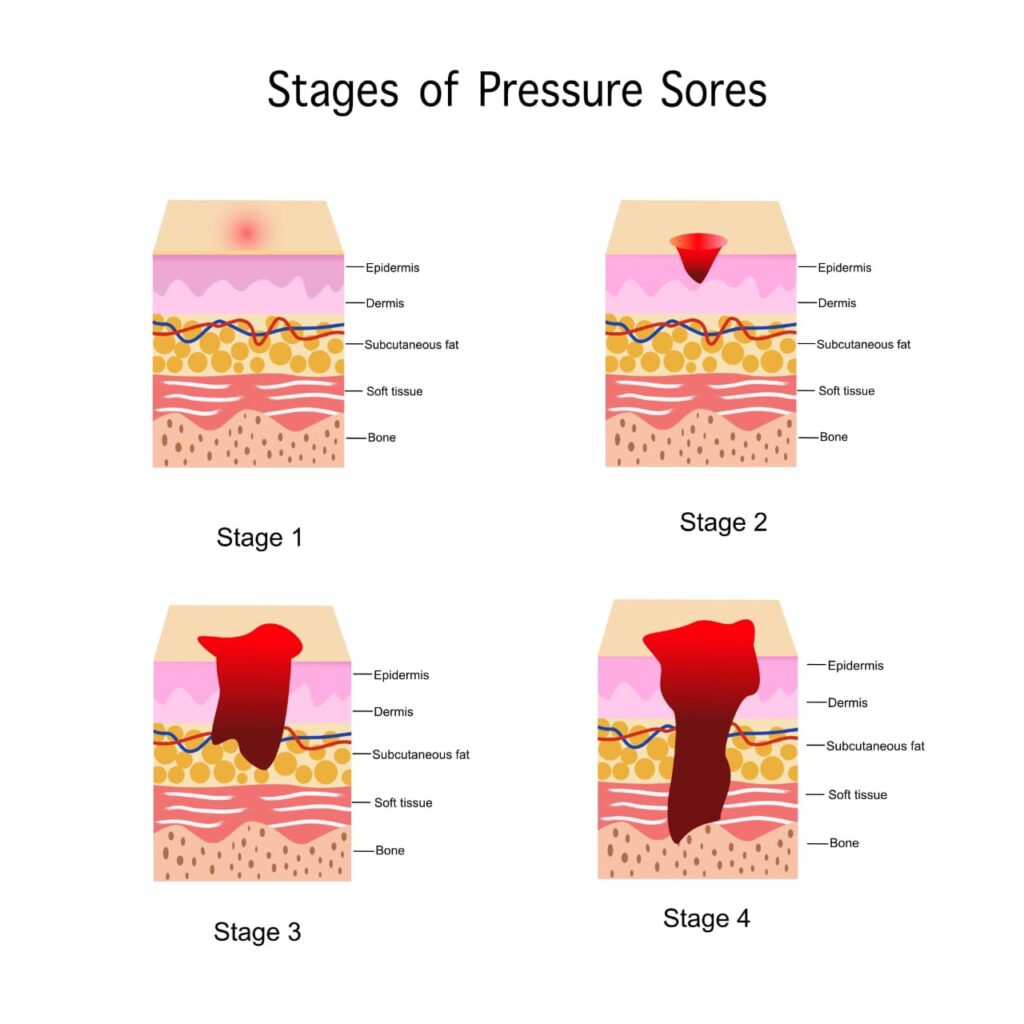
Stage 1: Non-blanchable erythema of intact skin; the skin remains red even after pressure is relieved.
स्टेज 1: बिना कटी त्वचा पर लालिमा; दबाव हटाने के बाद भी त्वचा का रंग लाल ही रहता है।
Stage 2: Partial-thickness skin loss involving epidermis and/or dermis (appears as a blister or shallow crater).
स्टेज 2: एपिडर्मिस या डर्मिस का आंशिक नुकसान (यह छाले या उथले गड्ढे जैसा दिखता है)।
Stage 3: Full-thickness skin loss involving subcutaneous tissue, but bone/tendon/muscle are not exposed.
स्टेज 3: सबकुटेनियस टिश्यू तक त्वचा का पूरा नुकसान, लेकिन हड्डी या मांसपेशियां अभी नहीं दिखतीं।
Stage 4: Full-thickness skin loss with extensive destruction, tissue necrosis, or damage to bone and muscle.
स्टेज 4: त्वचा का पूरा नुकसान जिसमें हड्डी, नसें या मांसपेशियां साफ दिखाई देने लगती हैं।
Surgical Asepsis in Wound Dressing (ड्रेसिंग में जीवाणुहीन तकनीक)
Sterile Field: Always maintain a sterile field; never reach across or turn your back on the sterile area.
स्टरलाइज्ड क्षेत्र: हमेशा स्टरलाइज्ड क्षेत्र का प्रबंधन करें; कभी भी इस क्षेत्र के ऊपर से हाथ न निकालें और न ही इसकी तरफ पीठ करें।
Dressing Change: Remove the old dressing with clean gloves; apply the new dressing only with sterile gloves.
ड्रेसिंग बदलना: पुरानी ड्रेसिंग को साफ़ दस्ताने (Clean gloves) से हटाएँ; नई ड्रेसिंग केवल स्टरलाइज्ड दस्ताने (Sterile gloves) से ही लगाएँ।
Moist Wound Healing: Research shows that wounds heal 3 to 5 times faster in a moist environment than a dry one.
नम वातावरण में घाव भरना: शोध बताते हैं कि सूखे वातावरण की तुलना में नम वातावरण में घाव 3 से 5 गुना तेजी से भरते हैं।
Exudate Assessment (घाव से निकलने वाले रिसाव का आकलन)
Serous Drainage: Clear, watery plasma that is a normal part of the healing process.
सीरस ड्रेनेज: साफ, पानी जैसा प्लाज्मा जो घाव भरने की सामान्य प्रक्रिया का हिस्सा है।
Purulent Drainage: Thick, yellow, green, or brown drainage that indicates infection (Pus).
पुरुलेंट ड्रेनेज: गाढ़ा, पीला, हरा या भूरा रिसाव जो संक्रमण (मवाद) का संकेत देता है।
Sanguineous Drainage: Bright red drainage that indicates active bleeding from the wound site.
सैंग्विनस ड्रेनेज: गहरा लाल रिसाव जो घाव से सक्रिय रक्तस्राव (Bleeding) का संकेत देता है।
Key MCQs for Bexyhub Prep (75,000 MCQ स्पेशल)
Q: Which nutrient is most essential for collagen synthesis and wound repair?
(A) Vitamin K (B) Vitamin C and Protein (C) Vitamin D (D) Calcium
Hindi: घाव भरने और कोलेजन बनाने के लिए कौन सा पोषक तत्व सबसे आवश्यक है? (जवाब: विटामिन सी और प्रोटीन)
Q: A Stage 3 pressure ulcer involves damage to which layer?
(A) Epidermis only (B) Dermis only (C) Subcutaneous tissue (D) Muscle and bone
Hindi: स्टेज 3 प्रेशर अल्सर में किस परत तक नुकसान होता है? (जवाब: सबकुटेनियस टिश्यू)
Expert Note by Deepak Kumar (MSc Nursing):
“Doston, main ek Nursing Officer hoon aur mera ICU mein lamba anubhav hai. Ye notes maine apne clinical experience aur GNM, Post BSc, aur MSc Nursing ki padhai ke aadhar par taiyar kiye hain taaki aapko exams mein madad mile. Agar aapko koi doubt ho toh comment karein.”
यह पोस्ट केवल शैक्षिक उद्देश्यों (Educational Purposes) के लिए साझा की गई है। यहाँ दी गई जानकारी मेरे नर्सिंग अनुभव और अध्ययन पर आधारित है। यदि आपको किसी जानकारी पर संदेह है या कोई शिकायत है, तो कृपया कमेंट बॉक्स में बताएं या हमसे संपर्क करें। किसी भी चिकित्सीय निर्णय के लिए पेशेवर डॉक्टर की सलाह अवश्य लें।
Our Specialized Health Education Portal:
Visit Care.Bexyhub.in →